My role
UX/UI Designer – Led end-to-end design of Family Management & Reminders flows
Team
Product Manager, Senior Designer, and Engineering Team
Tools Used
Figma, Figjam, V0, Whimsical.ai, After effects
Timeline
3 Months
Designed a health application for family members to maintain their health records easily. View Live
Families often struggle with scattered medical records and missed reminders, which can lead to missed medications or unattended health conditions. Therefore, I tried to solve this problem by designing the Family Management and Reminders flows to make health management simple, structured, and stress-free.
What is Maatra?
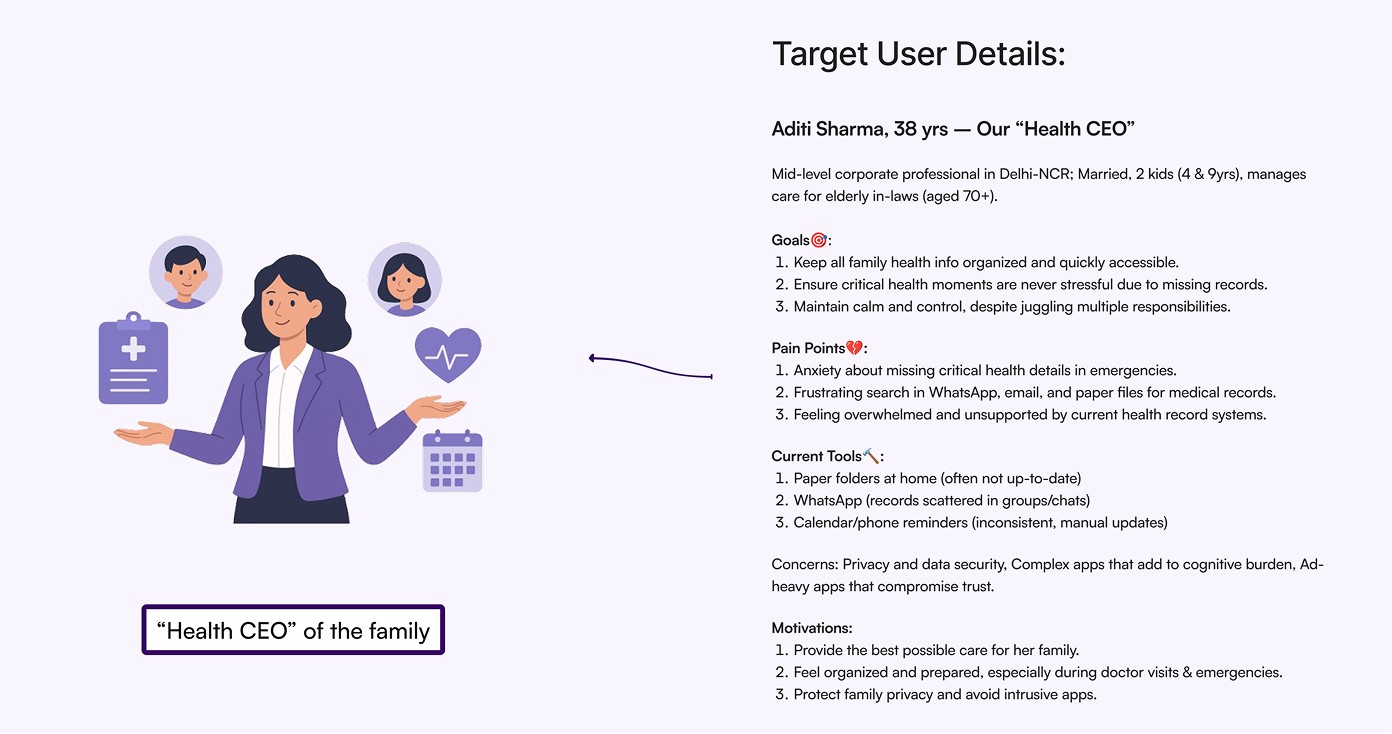
Meet the Health CEO of the family
Every family has one. The unsung “CEO of health” — a parent, spouse, or elder who takes on the responsibility of managing everyone’s health. From juggling kids’ vaccinations to elders’ prescriptions, even pet appointments, this person carries the invisible load.
That’s where Maatra comes in
We built Maatra as India’s first family health management app, a secure, mobile-first platform that:
Centralizes records, appointments, and reminders in one place.
Simplifies coordination across family members.
Builds trust, sustained usage, and a preventive health ecosystem at home.
The Problem
Maatra’s research revealed families overwhelmed by:

Identifying these problems helped us creating an opportunity to design structured, low-friction flows that simplify caregiving while building trust.
Design Goals
To move from scattered problems to clear solutions, we followed a human-centered design approach:

Challenges Faced
01
Data privacy → ensuring secure, role-based access.
02
Overloaded caregivers → reducing stress, not adding more tasks.
03
Role clarity → differentiating Family Owner vs. Family Member.
04
Accessibility → designing for diverse age groups with WCAG 2.2 compliance.
Target Audience
We identified three core psychographic segments who interact with caregiving differently:

Key Insights
Maatra primarily served the “Health CEO” — the family member managing caregiving tasks across generations.

My Contributions
I owned the end-to-end design of two critical design flows:


Design Prcoesses (3 Steps)
STEP 1
Research & Framing the Product Vision
Before jumping into designs, I worked closely with the Product Manager and Founder to frame what Maatra should stand for. We kicked things off in vision workshops using FigJam, where we mapped user needs, pain points, and business goals side by side. Also aligning questions such as:
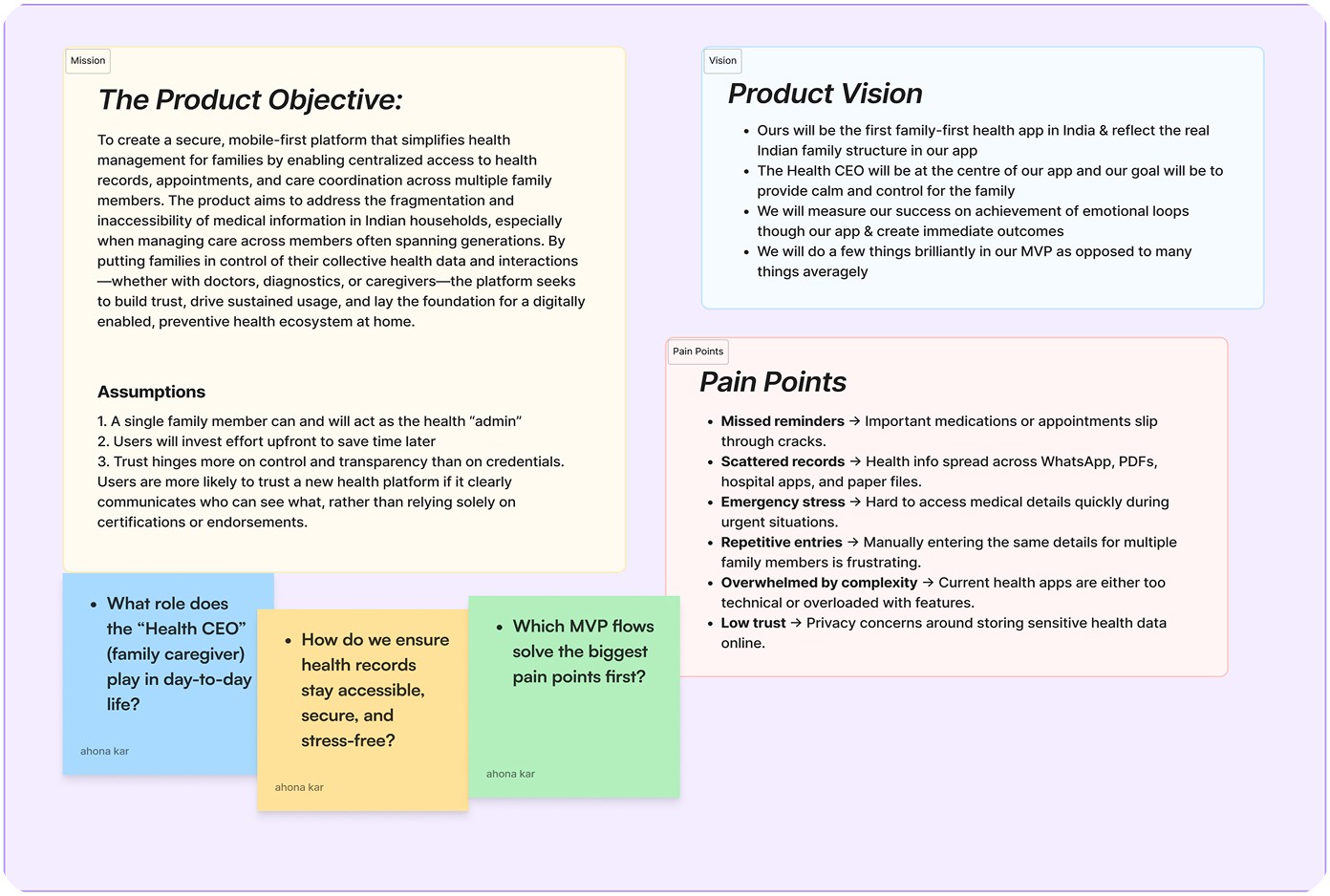
Key findings of the vision workshop:
Persona definition → Framed the “Health CEO” caregiver role.
Vision workshops → Whiteboarding + FigJam with PM/founder to align on the north star.
Brainstorming flows → Prioritized Family Management & Reminders as must-have MVP features.
Business alignment → Ensured design supported goals like higher stickiness, reduced churn, and differentiation.
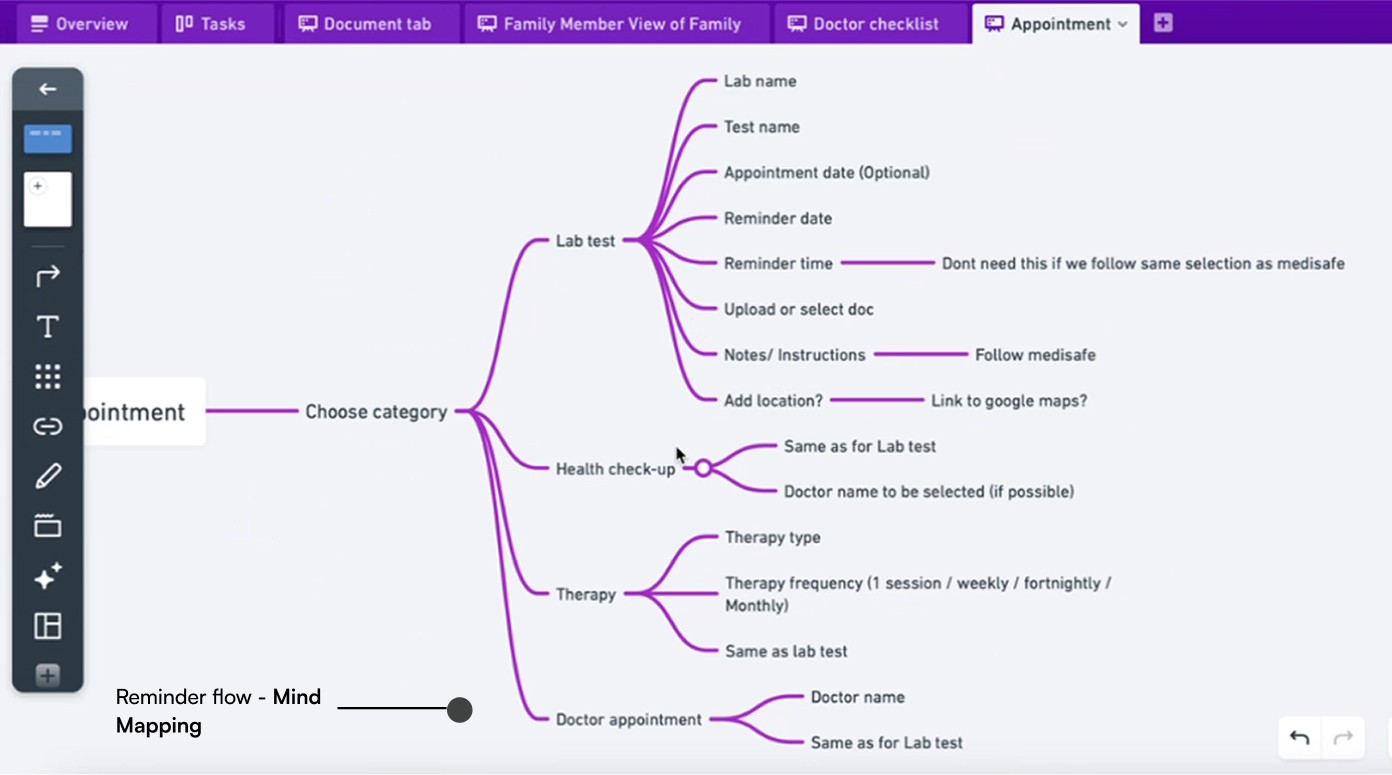
Mind-mapping reminders flow → Helped break down edge cases and ensure smoother task completion using whimsical.ai.
STEP 2
Design Goals
Role clarity → Family Owner vs. Family Member ensured trust and security.
Scalable flows → IA designed to expand beyond MVP without rework.
Business viability → Prioritized high-retention features (Reminders + Family Mgmt).
This gave the team a clear blueprint for building a differentiated health platform that was simple for caregivers and sustainable for the business.
STEP 3
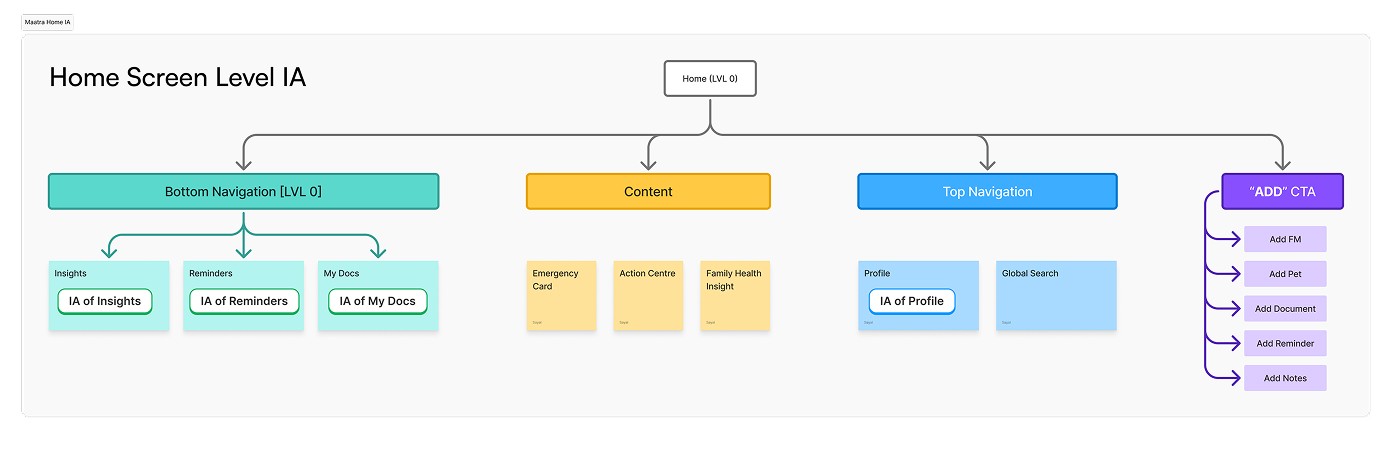
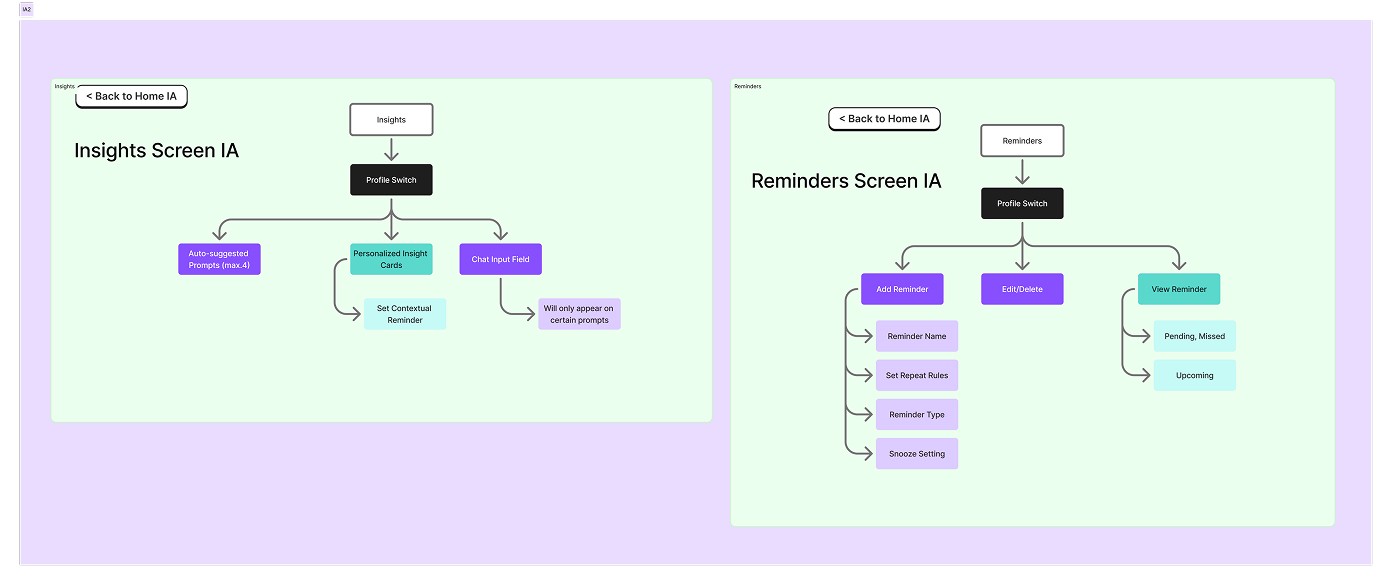
Building Our IA (Information Architecture)
After mapping the core flows, I designed a scalable Information Architecture (IA) to guide how caregivers move through profiles, reminders, and family management. The IA ensured clarity for the MVP while creating a flexible foundation for future features. I applied the same structure across key flows like Reminders, Insights, Family Management, and Document Upload to keep navigation consistent and adaptable.
User Persona
For the MVP, we focused on the Family Owner — the ‘Health CEO’ managing records and reminders for the household. Centering on this persona let us address key pain points and design high-impact flows without overcomplicating early stages.
Wireframes & Iterations
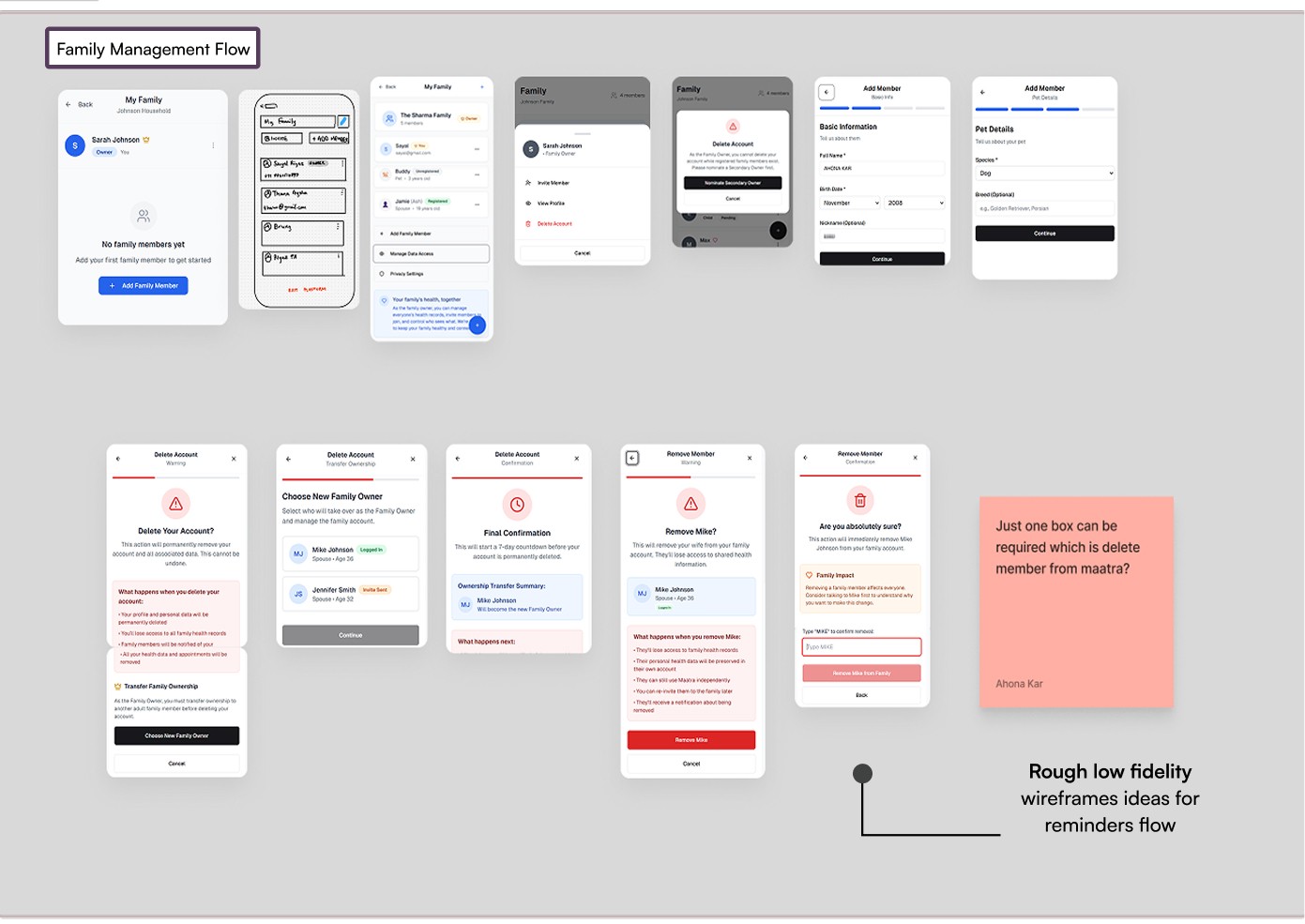
For Family Management & Reminders
To design the Family Management & Reminders flow, I first reviewed the PRDs and user stories to understand requirements. Since this was an MVP in a fast-paced environment, I used Vercel’s V0 to create low-fidelity wireframes instead of a detailed IA. This helped me to speed up the wireframe creations for feedback and iterations.
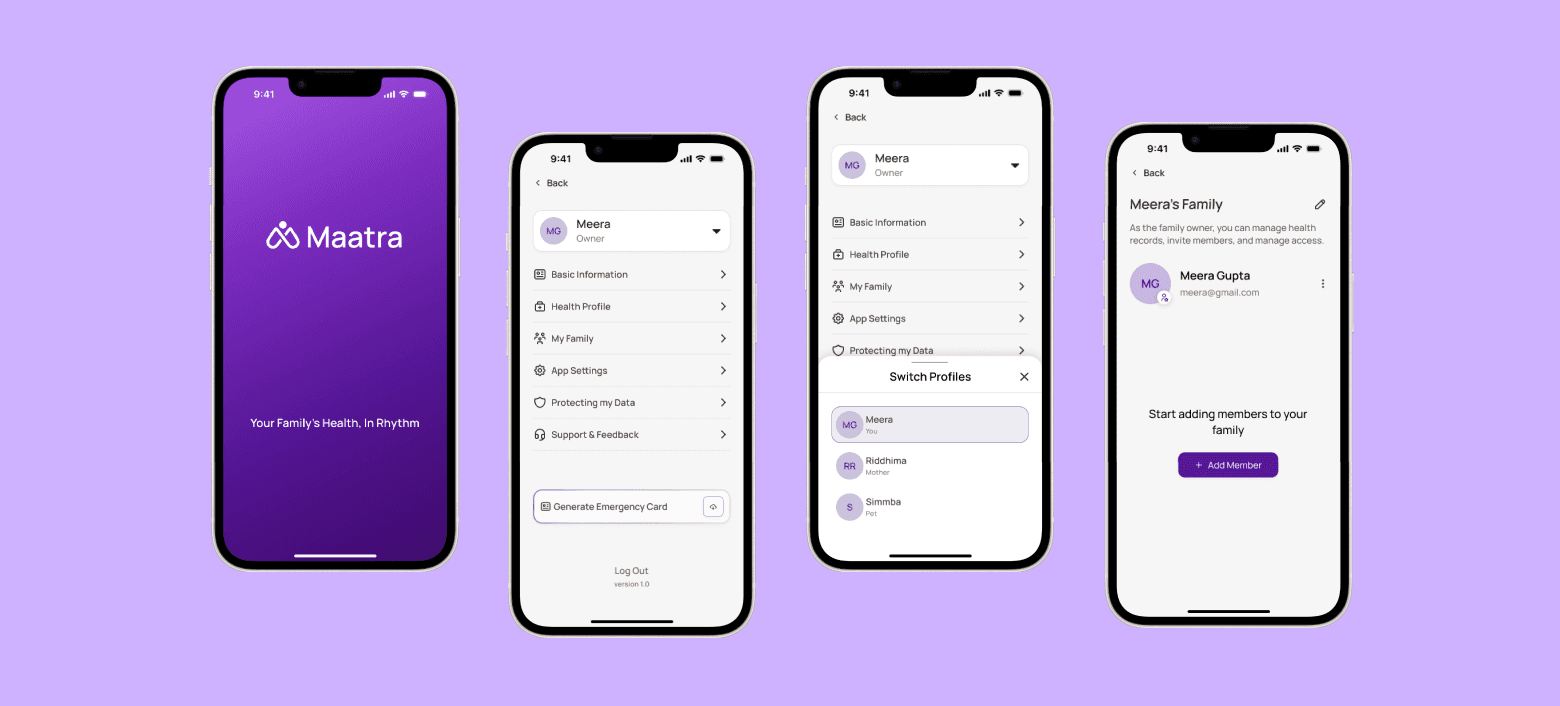
Refined wireframes to improve role clarity, profile switching, and deletion flows—making setup simple yet scalable for complex family needs.
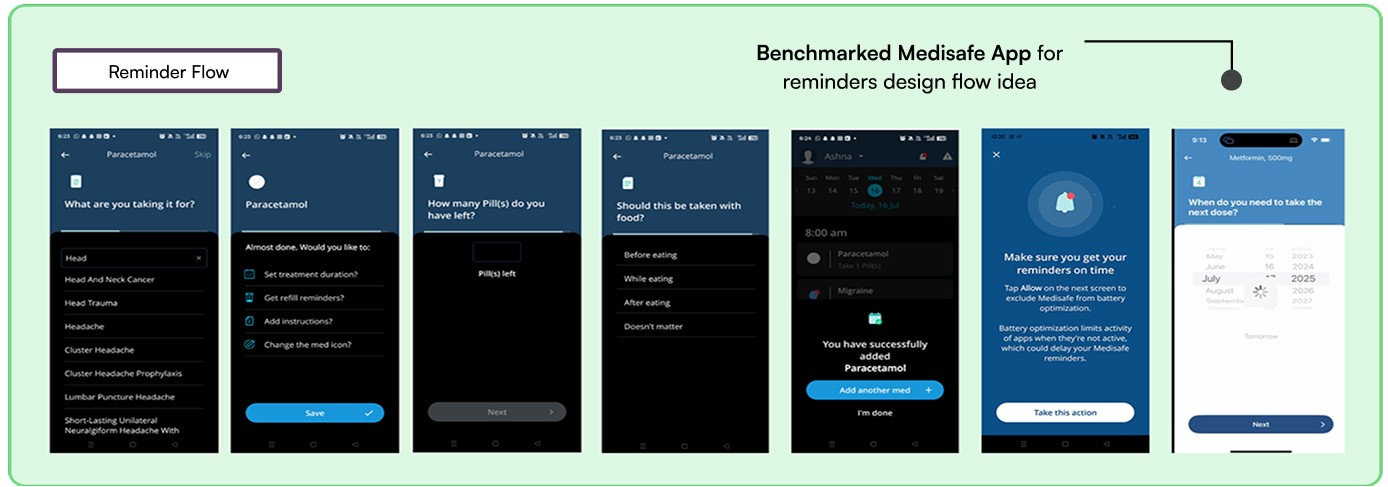
Reminder Flow Benchmarking and Iterations
To refine the Reminder Flow, I first benchmarked existing apps like Medisafe to study how they handled tap efficiency, notifications, and setup friction. This helped identify best practices for guiding users through reminders without overwhelming them.
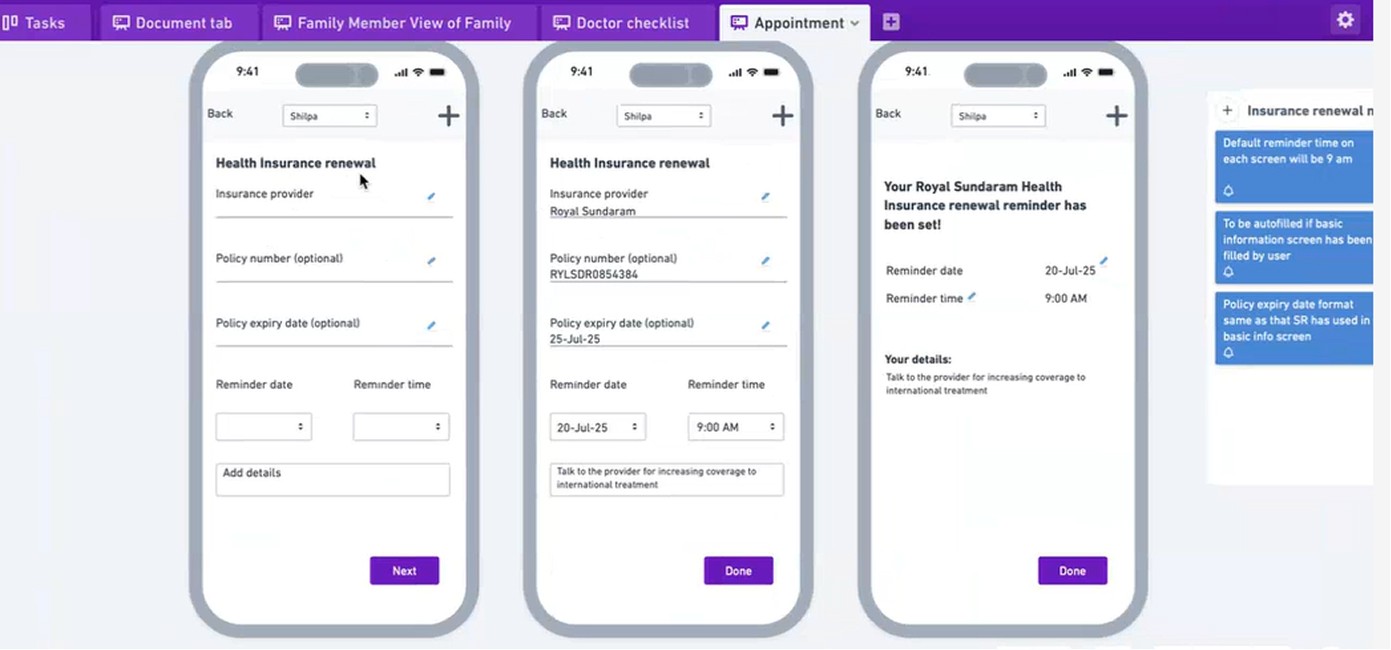
Next, I created wireframes focused on profile switching and insurance renewal reminders — key use cases for families managing multiple members. These variations were tested in sprint reviews to compare which flows felt smoother and required fewer steps, ensuring the final design balanced clarity with efficiency.
Benchmarking Profile Switching Patterns
Before designing family management, I benchmarked leading apps like Twitter, Reddit, Google, and Instagram to study how they handled multi-account switching. The goal was to reduce friction for caregivers who may need to switch between profiles quickly in high-stress situations.
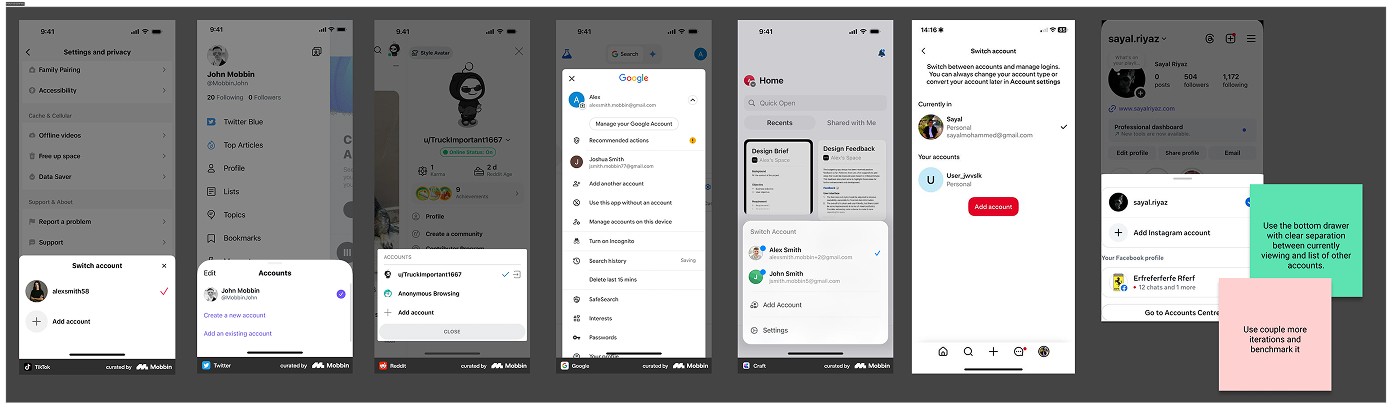
After Iterations
After the first round of wireframes, we collaborated with the PM to incorporate feedback and refine the flows — improving role clarity, profile switching, and deletion tasks to make setup simple yet scalable for complex family needs.

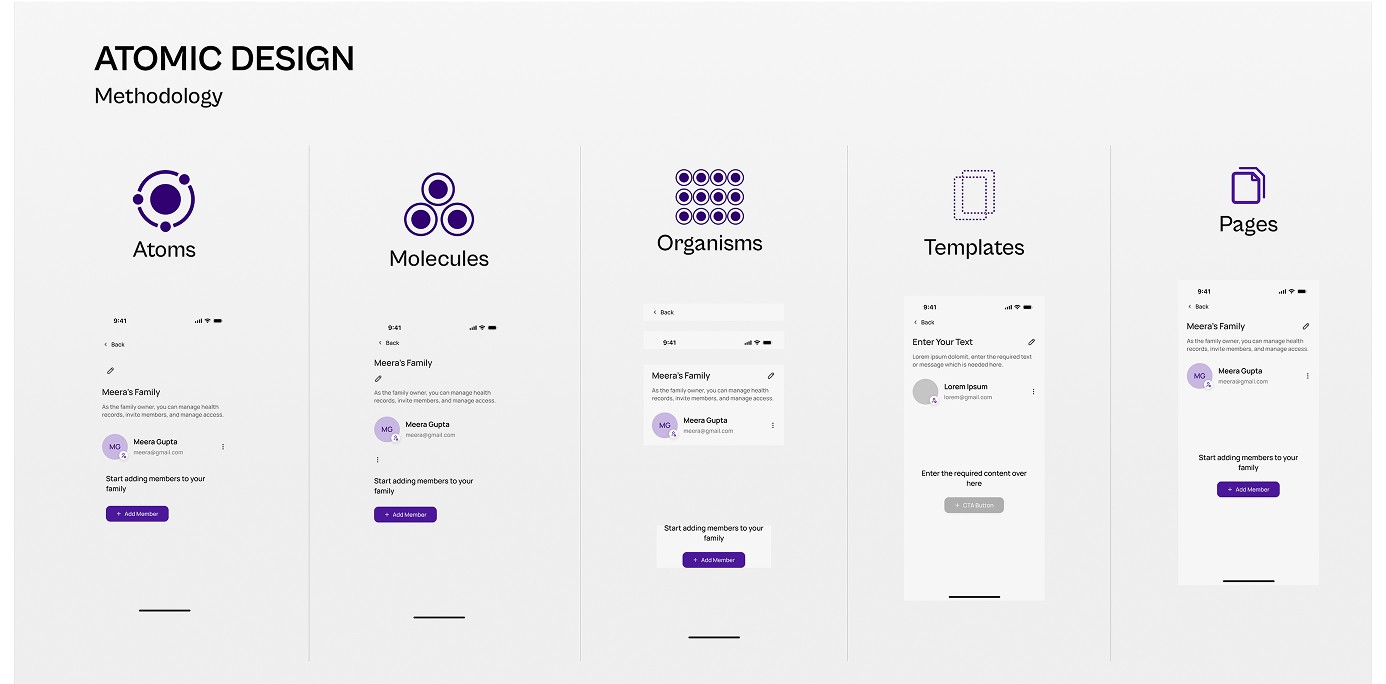
We chose Atomic Design System
Here's Why:
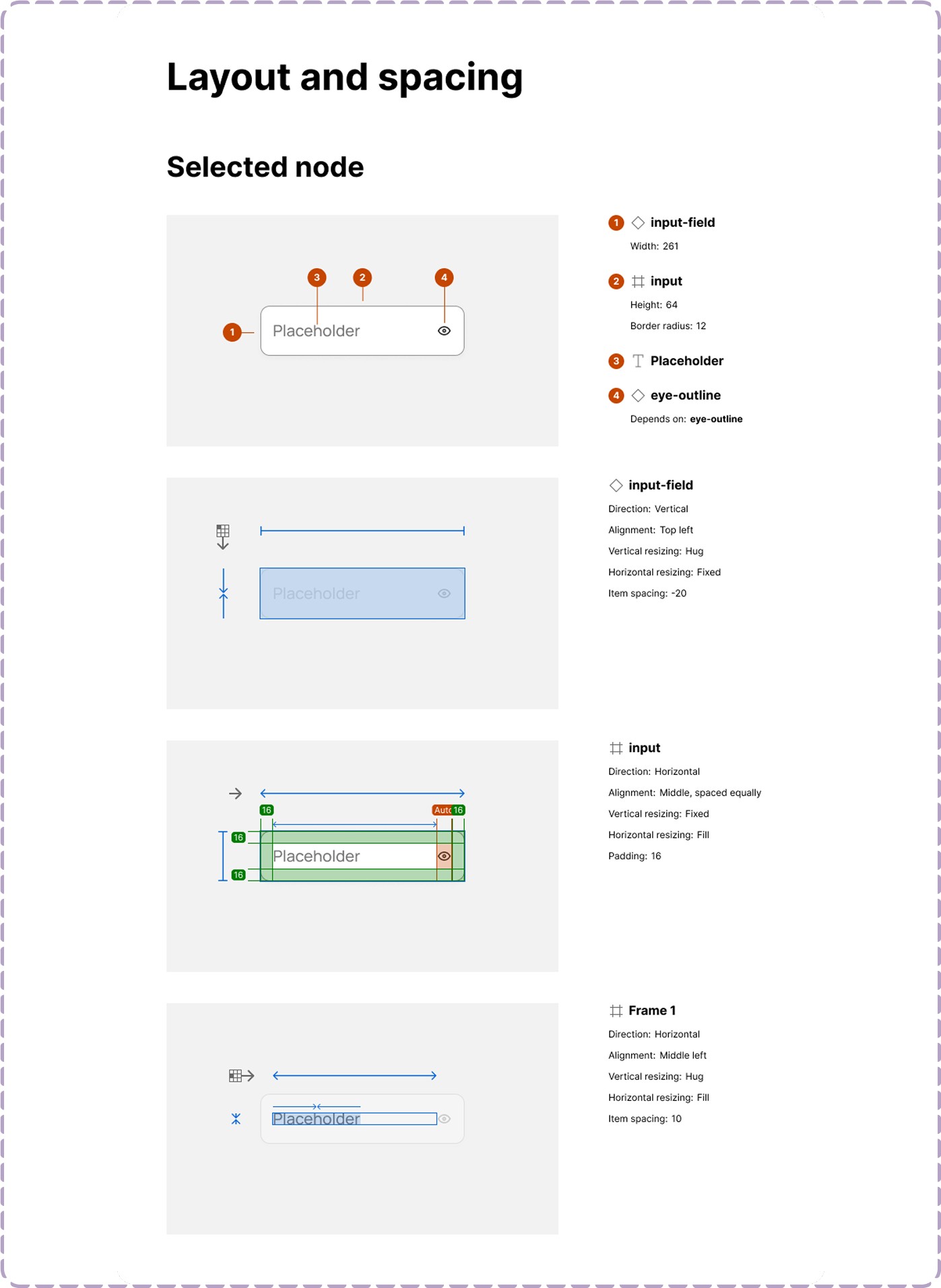
Designing for Maatra was about building a system that could scale reliably, remain accessible, and support users in stressful health moments. To achieve this, we grounded the design in three frameworks: Atomic Design, WCAG 2.2, and the SCARF model. Together, they ensured the product was systematic for devs, inclusive for users, and empathetic for families.

High Fidelity Screens for Family Management & Reminders
Family Management Flow — Adding Members
To make caregiving collaborative, the Family Owner (FO) can add family members and assign roles. This flow was designed to balance ease of onboarding with privacy and consent requirements in healthcare.
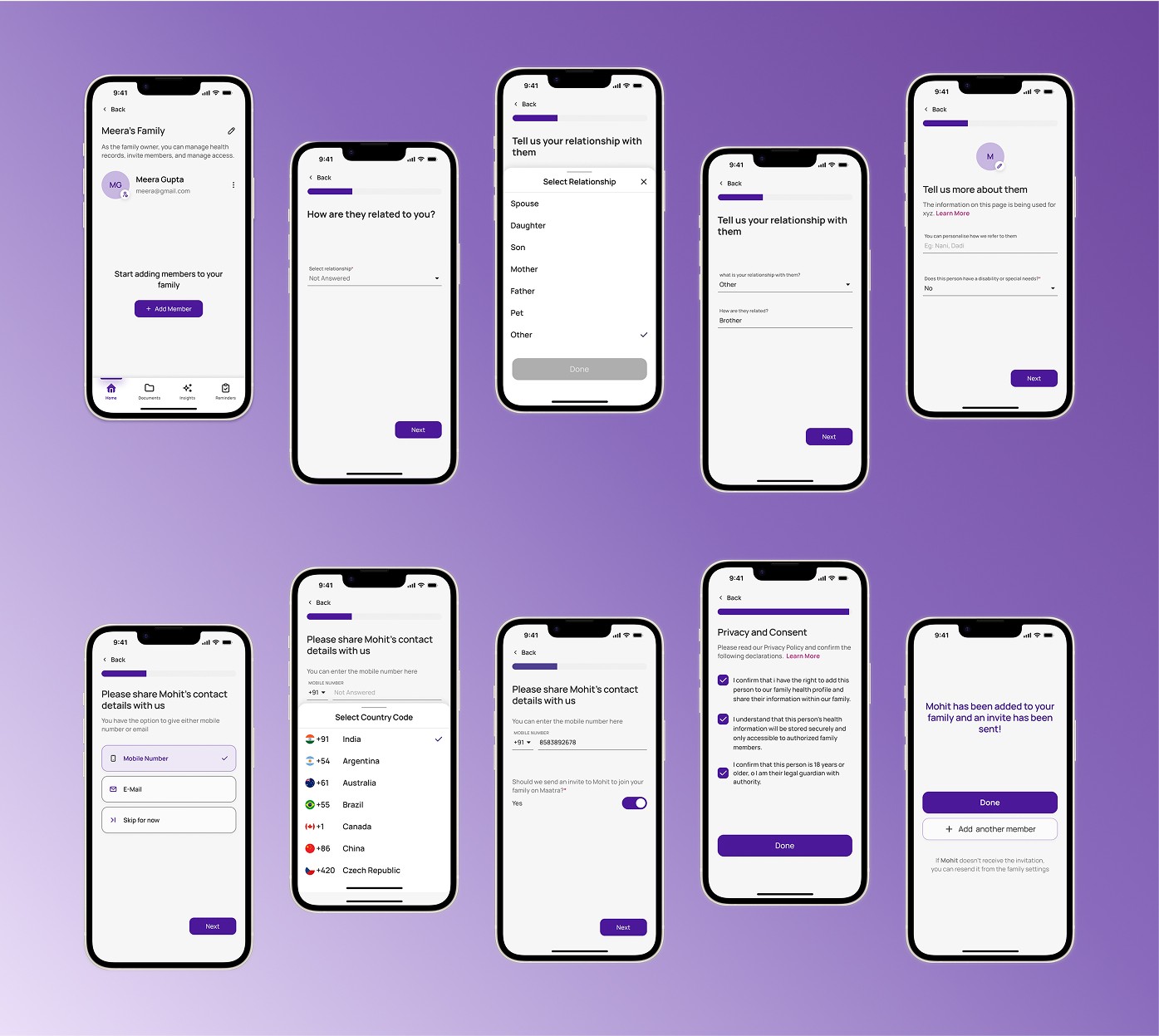
Key UX decisions:
Progressive disclosure: Asking only one piece of info at a time (relationship → details → consent) reduced cognitive load.
Privacy-first design: Consent screens made members aware of how their data would be shared (SCARF → Fairness & Certainty).
Error-tolerant onboarding: FO could skip optional details (e.g., email/phone) to avoid drop-offs, while still completing the flow.
Reminders Flow
Managing healthcare often means juggling multiple appointments, medications, and tests. To reduce the stress on caregivers, I designed a step-by-step reminder flow that ensured clarity, flexibility, and error prevention.
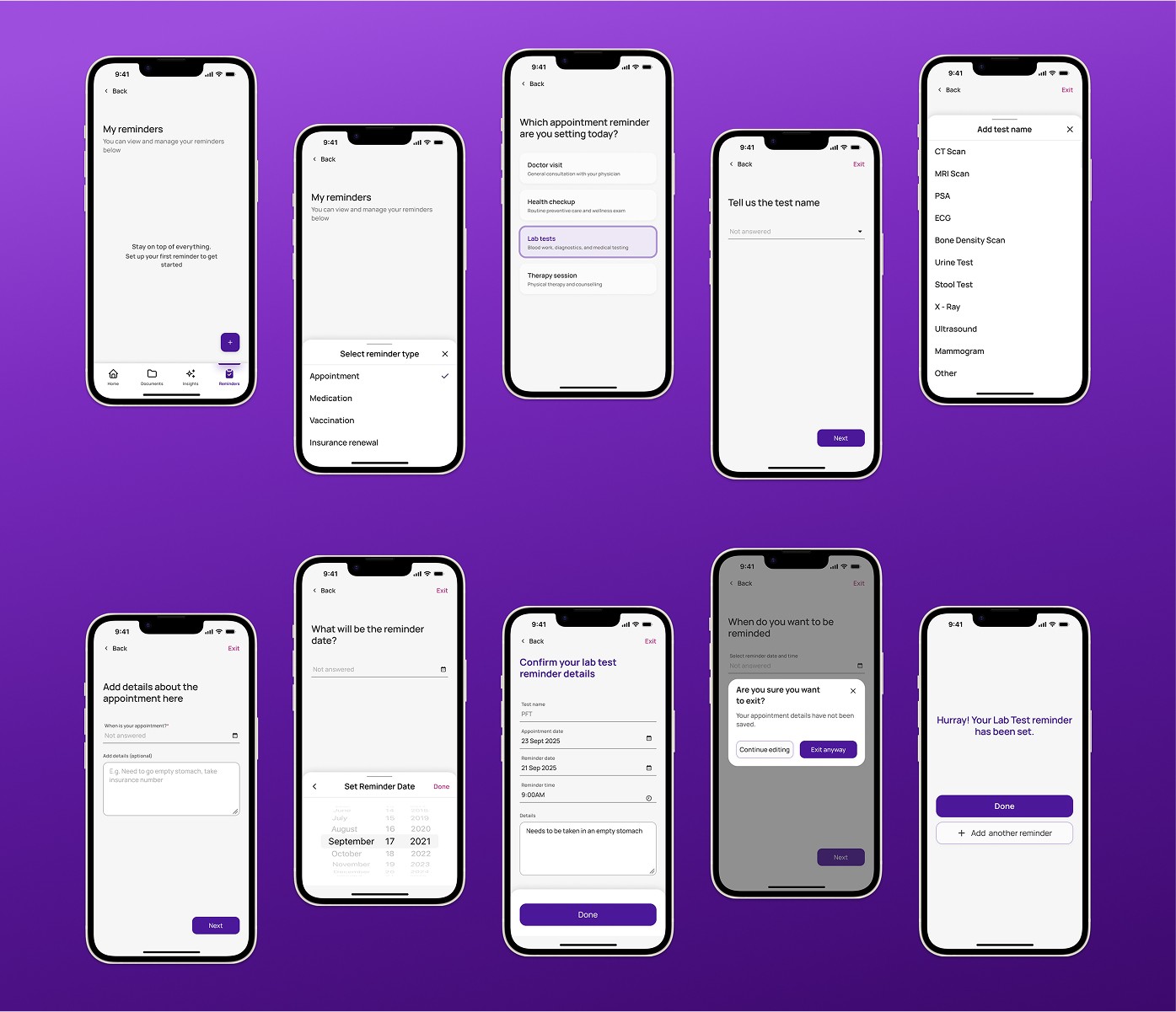
Key UX decisions:
Certainty: Step-by-step screens (one task at a time) reduce ambiguity about what comes next.
Autonomy: Users choose reminder type (appointment, medication, test), giving them control.
Status: Personalized success message (“Hurray! Your lab test reminder has been set”) acknowledges task completion and gives a sense of achievement.
Key Learnings
Designing for healthtech isn’t just UI polish — it’s about trust, reassurance, and clarity.
Benchmarking early saved countless design cycles.
Applying behavioral models (SCARF) in real design decisions gave me frameworks for empathy-driven UX.
Results
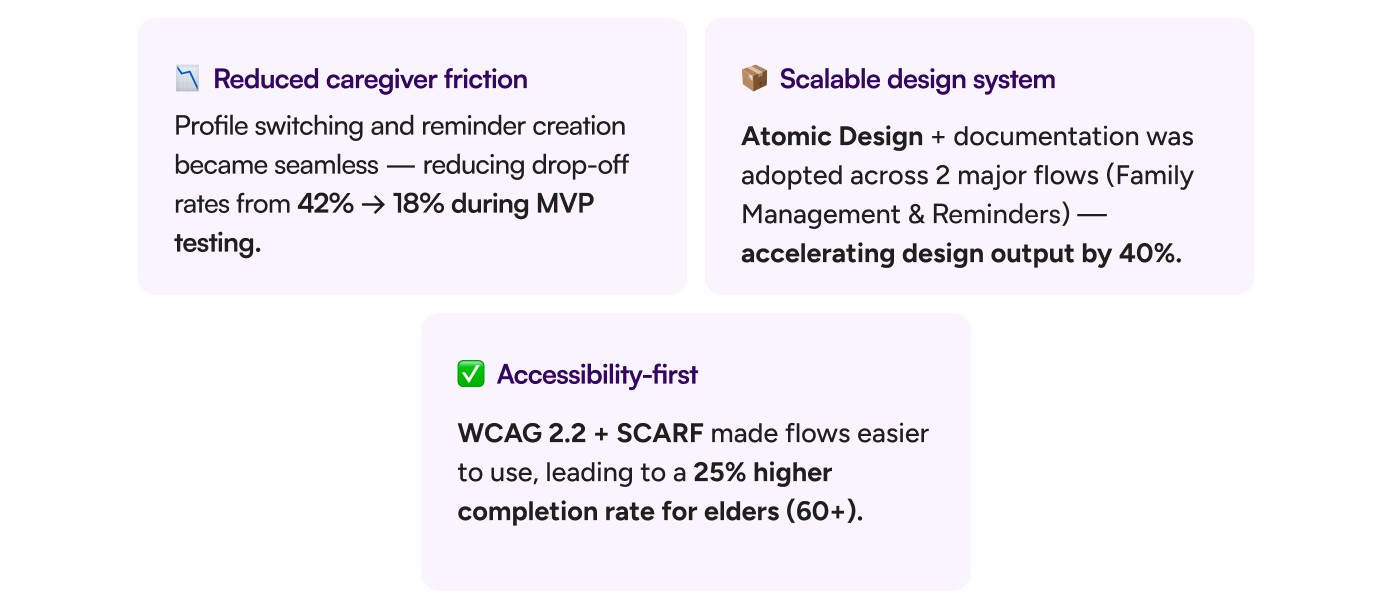
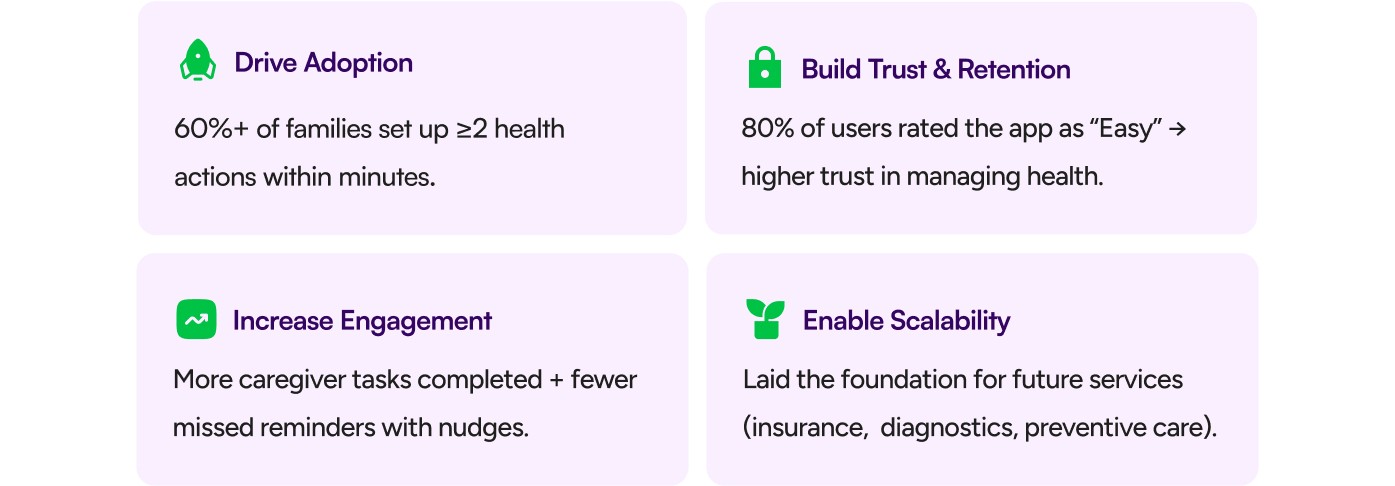
Business Impact of Maatra
Future Ideas
Accessible reminders: Audio cues for users with visual impairments to support inclusive health management.
Smart reminders: Auto-suggest checkups & recurring tasks based on past activity.
Offline-first mode for low-connectivity regions.
Maatra | HealthTech Mobile Application
Thank you for reading till the end!